
In the first blog, which you can read here, we identified the myths, stereotypes and the perfect storm that creates burnout. We began to identify the role of the ‘Always on’ culture we live in and the specific situations that will intensify its impact.
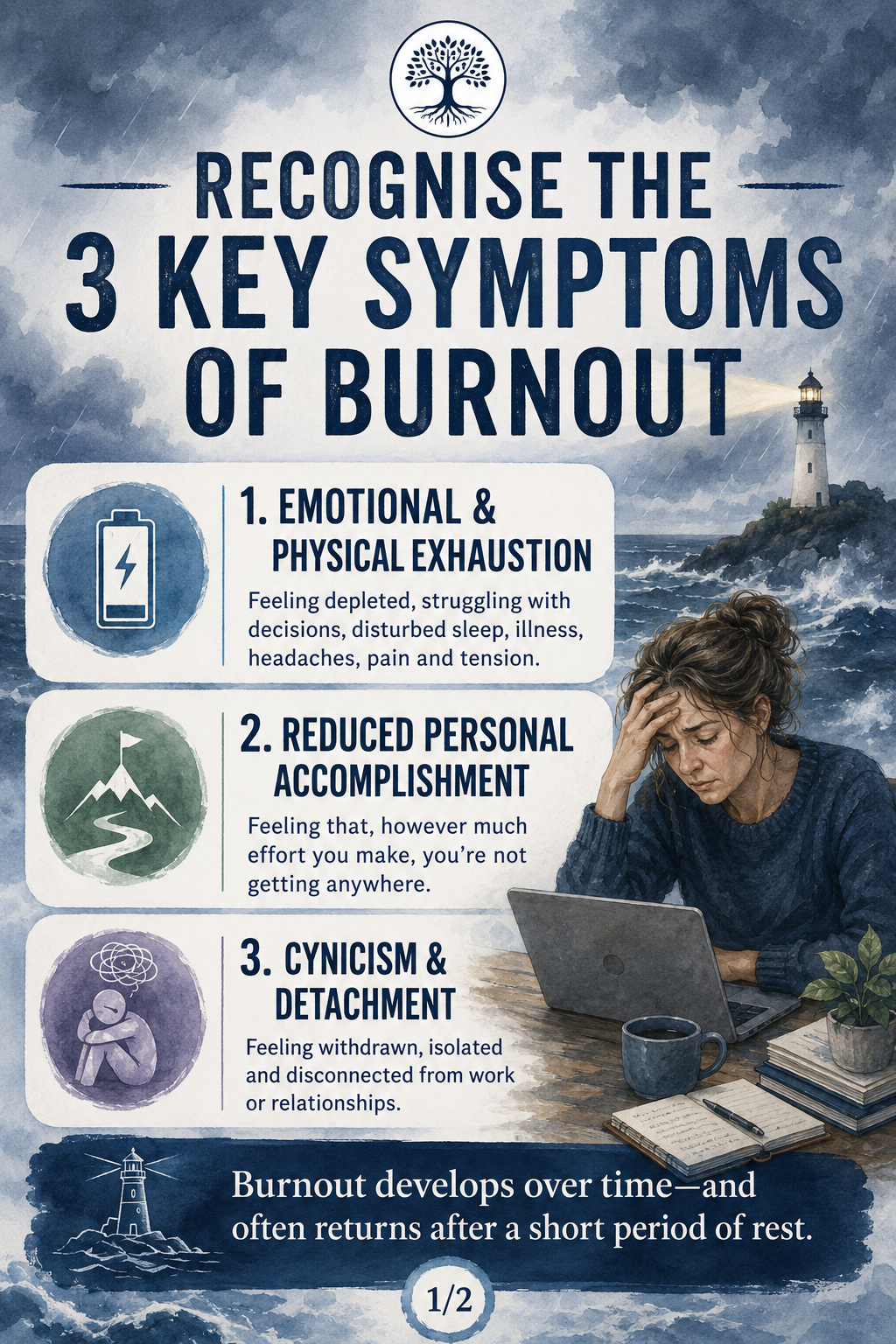
Recognise the three key symptoms of burnout.
1. Emotional and physical exhaustion - feeling entirely depleted to the point where even making simple decisions is really difficult. Your sleep is disturbed, you have an increased susceptibility to illness, headaches, colds, physical pain and tension. Migraines, neck, shoulder and back pain are often the reasons people first book with me, and within a few sessions, we identify these as the ‘noisier’ symptoms of burnout. There’s more simmering in the background to work on next.
2. Reduced personal accomplishment - a sense that no matter how much effort you put in, you're just not getting anywhere, partly due to feeling detached and withdrawn from work or people around you, which can be hard to recognise.
3. Developing a cynical attitude towards (paid or unpaid) work and your relationships. Due to feeling detached from work and unconnected with people, you experience a sense of withdrawal and isolation.
If you are in burnout, you will have been experiencing all three of these things for an extended period. Even with an opportunity to rest and recharge, you feel a bit better, and suddenly, it's back again.
All of those little warning signs feel buried in an erosion of confidence, withdrawal and detachment from relationships. Outside of work, you stop doing the things that you love, creating another barrier to feeling better - because you don't have access to what makes you feel like ‘You’. And there's a guilt associated with that - you know you're not the same person you perhaps were at home and work.
There's also an increased susceptibility to depression if we are experiencing ongoing stress and burnout. It's important to identify these markers and take action to get support. If work is affecting your health, there are obvious, definitive solutions, for example, stopping the work, which is rarely a realistic solution on offer. But there's something to consider in stepping back or redefining boundaries.
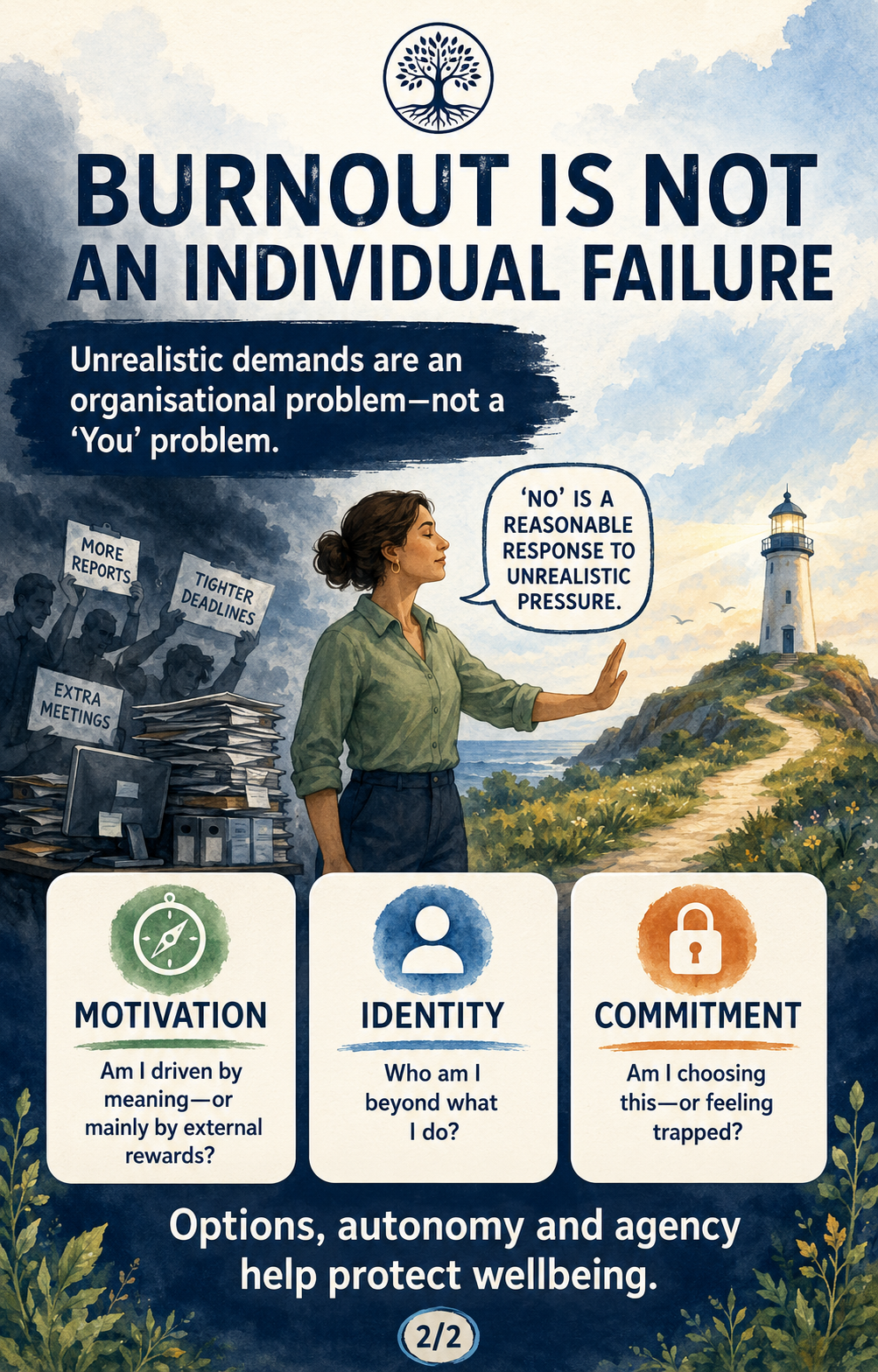
If you are experiencing burnout, please know this is an organisational issue, not an individual one. If your job is asking you to do extra work and you're not able to - that's not a ‘You’ problem; that's an organisational problem. Trends such as ‘quiet quitting’ are a response to actually doing your job as it's described in your job description - not about a lack or being lazy - it's just doing what you're supposed to and avoiding feeling pressured to do the added extras. ‘No’ is a perfectly normal and reasonable response to an environment of unrealistic expectations and pressures.
Although not everyone agrees that burnout always has its roots in childhood, there are individual drivers, or traits, that make some people more vulnerable. There are a few things to consider here:
1. Motivation. Research suggests people who are more intrinsically motivated - doing what they do because they love it - are less likely to experience burnout than people who are more extrinsically motivated - doing things for external rewards like salary recognition.
2. Identity - People who develop a singular identity - their whole identity is tied up in what they do - “If my job isn't going well, and my job is my entire life, then nothing's going well” - is a really fragile foundation for well-being.
3. The form of commitment. - 2 different profiles: 1. Attraction - we do the job because we want to engage with it, we experience plenty of benefits, and only a few drawbacks because people who are more attracted to their job are less likely to experience burnout. Profile 2. Entrapment - a lack of attractive alternatives ”I do this job because I've always done it, and everybody expects me to”. Or “People think that I'm good at it, so I'm kind of stuck in it.” We might be financially stuck in a job. It's psychologically helpful to feel you have other options, a sense of autonomy and agency.
In the final blog, we identify the difference between healthy and unhealthy stress, the cumulative effects of chronic stress and how to take the tipping point away from chronic stress to prevent burnout.