
Despite often being dismissed and not taken seriously, many of my clients describe how burnout slowly and quietly erodes their identity. It’s challenging to recognise the signs, and our culture is geared towards gritting our teeth and just getting on with it. It has no clinical diagnosis, but is defined as a state of chronic work-related stress that is plagued by misleading stereotypes.
It's not a new phenomenon. It has been recognised for over 50 years and is not reserved for high-performing environments such as the sports and corporate world. Burnout is more related to people and relationships - roles of emotional investment, including challenging (paid and unpaid) caring roles, who are often at high risk of feeling undervalued & unrecognised.
Burnout is the perfect storm of:
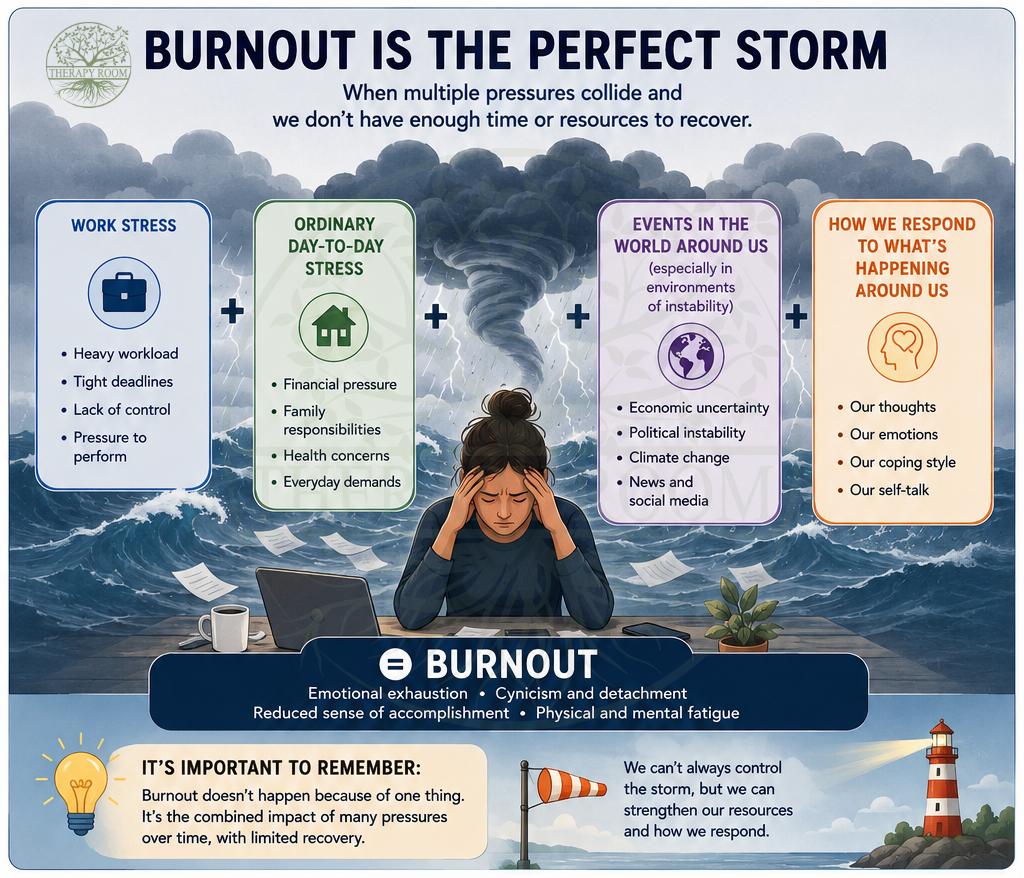
It's important to remember:
How we interact with these situations is the game changer.
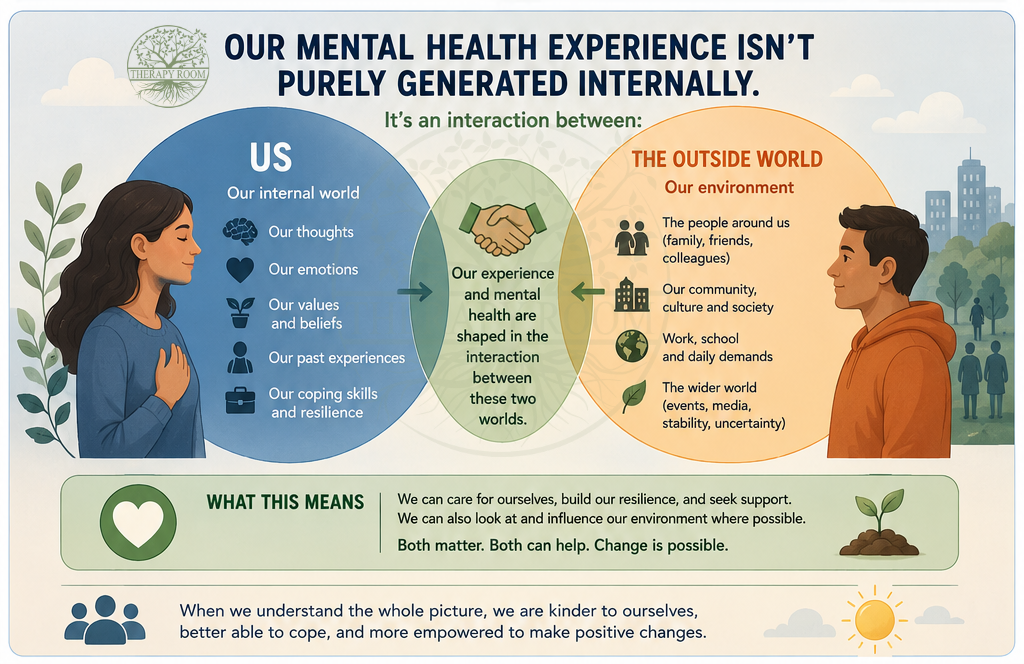
The original research into burnout was in the 1970s, identifying people with vocational exhaustion - air traffic controllers, workers in drug rehabilitation and legal aid lawyers experiencing emotional and physical exhaustion and cynicism in challenging relationship work roles.
50 years on, we now live in an ‘Always on’ culture that blurs the lines between work and home. It's not unusual for workplaces to reward us for being agreeable and pushing through exhaustion. My clients describe uncomfortable workplace hierarchies or feeling instability and shutting down their emotions, behaviours that often start in childhood. They adapt to fit in, becoming ‘People Pleasers’, and are praised for ignoring their own boundaries. For a while, they maintain this, but in time, become frazzled and struggle with the usual ups and downs and arrive in my treatment room for their first session, feeling generally run down.
This situation is intensified for clients with a demanding caring role at home. They might have young children, teenagers, an unwell family member or an elderly relative to support. Many of my clients are highly sensitive and/or neurodivergent themselves and experience sensory overload, and the act of masking has weighed heavily on them in their working environment.
Most people who experience burnout don't really recognise it until they're already there -
To learn more, click here to see more on this in the next blog in this series.
Do you recognise the three key symptoms of burnout?