In the previous parts of this series, we explored the myths and stereotypes surrounding burnout, the “perfect storm” that can create it, and the impact of the always-on culture in which we live.
In this final part, we’ll look at recovery: how we can restore the balance, replenish our resources and reduce the risk of slipping into burnout again.
It’s important to remember that a little stress is not necessarily harmful. We have evolved to manage short periods of acute stress. The greater risk comes from the cumulative effects of chronic, ongoing or repeated stress, particularly when we do not have enough time or opportunity to recover.
Imagine your life as a set of weighing scales.
On one side are all the demands you face from day to day. These may include work deadlines, important decisions, financial worries, family responsibilities, health concerns and the many smaller hassles that gradually add up.
On the other side are your resources: the things that help you cope with pressure and recover from it. These might include support from family and friends, healthy habits, emotional regulation, practical coping skills, resilience and time for rest.
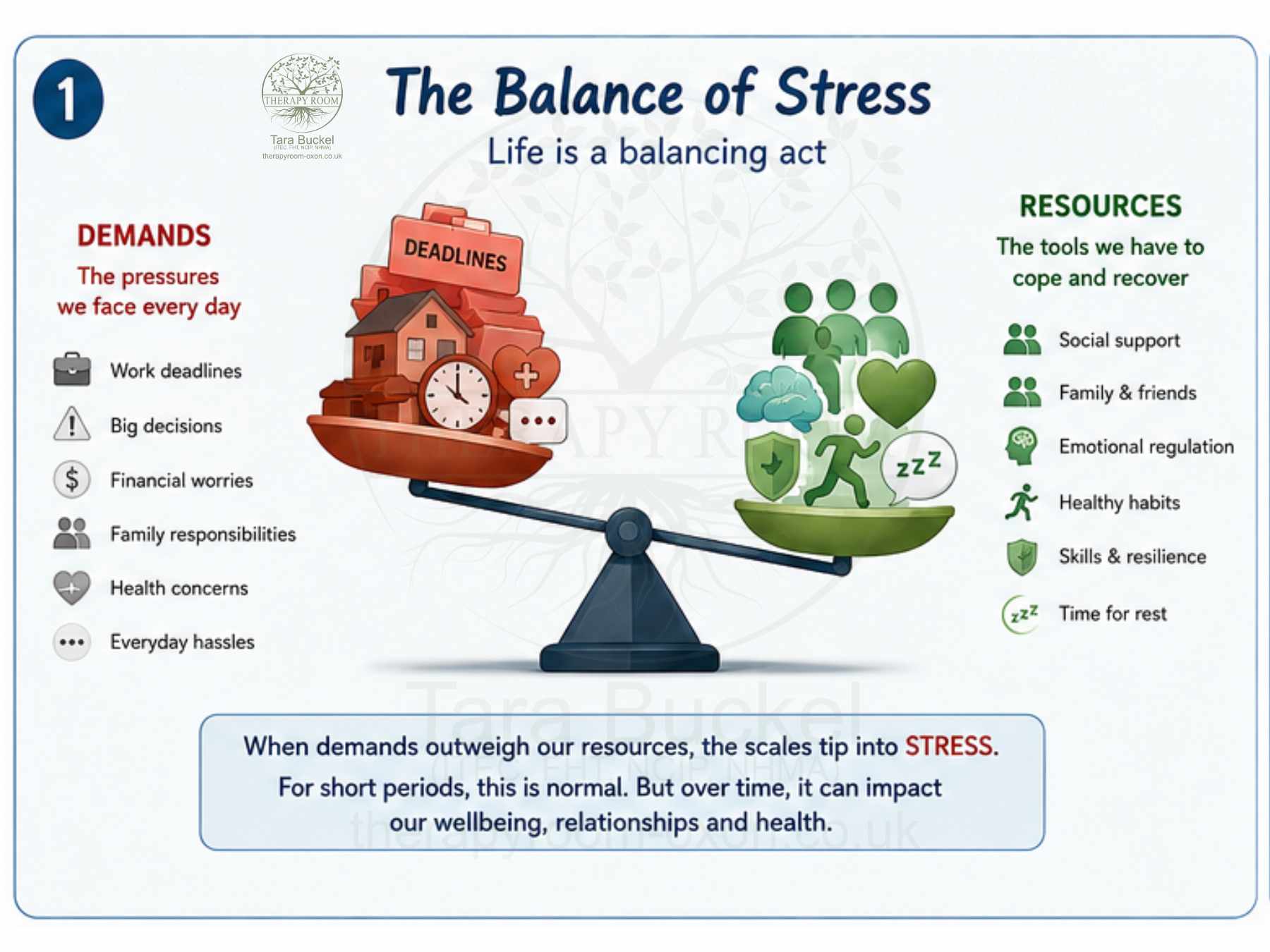
When demands outweigh our available resources, the scales tip towards stress. For short periods, this is normal and manageable. When the imbalance continues, however, it can begin to affect our wellbeing, relationships and physical health.
The scales do not have to remain tipped in one direction. We are dynamic and adaptable, which means that we can strengthen and replenish our resources.
This could involve seeking the right support, developing coping skills, setting clearer boundaries, prioritising what matters or making practical changes to reduce some of the pressure.
We cannot always remove the demands we face. Sometimes we need to tolerate a difficult situation for a while. Increasing our support and coping resources can help us carry that stress while we consider what needs to change.
However, additional pressures can alter the balance very quickly. An argument with a partner, physical illness, poor sleep or another unexpected difficulty may mean that stress which previously felt manageable suddenly becomes overwhelming.
This is why burnout is not necessarily caused by job demands alone. It is often associated with being unable to recover after particularly busy, stressful or emotionally challenging periods.
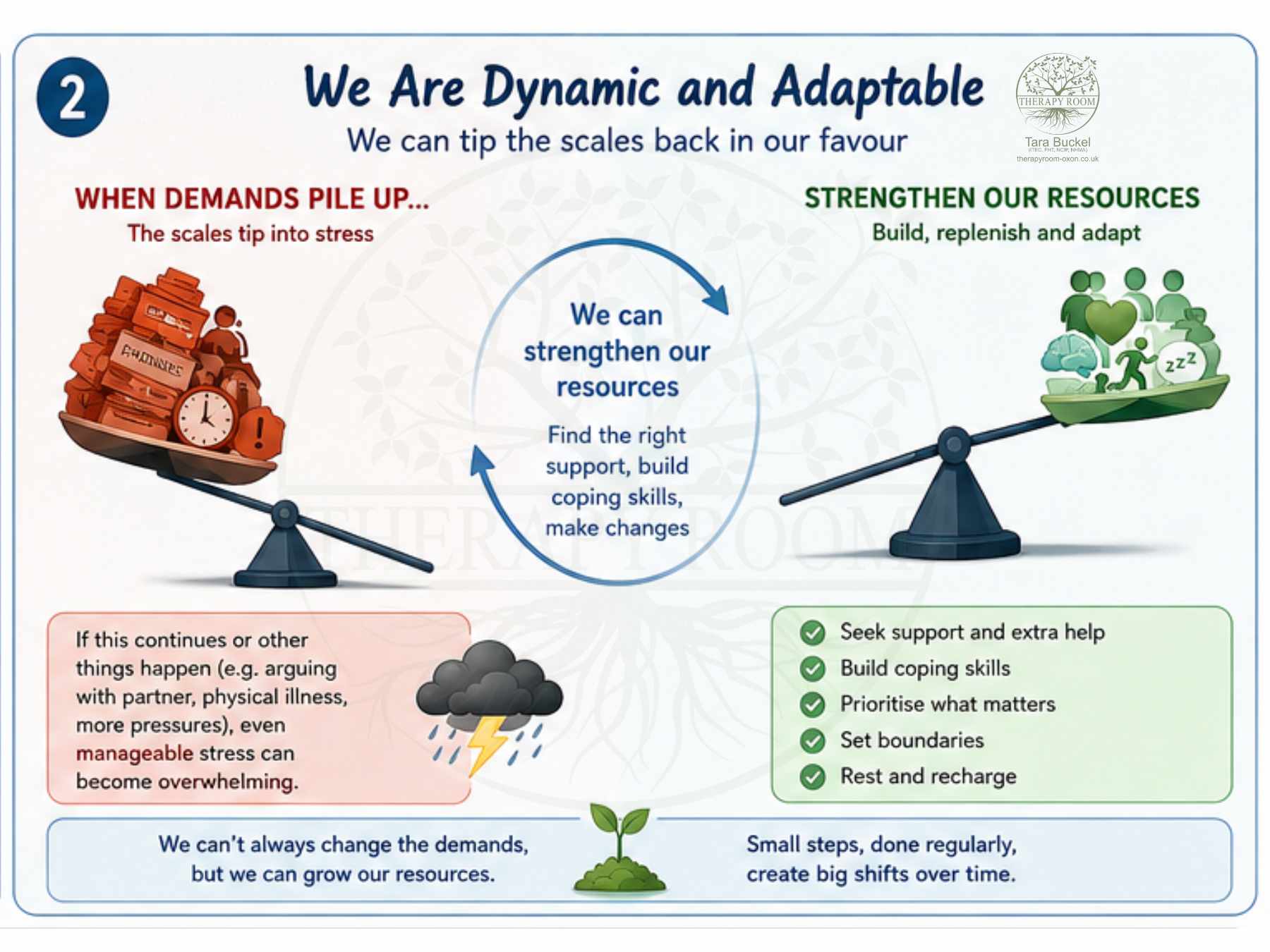
Small steps, taken regularly, can gradually tip the scales back in our favour.
One of the most important ways to prevent and recover from burnout is to make rest and recovery part of everyday life.
Many people push themselves hard from Monday to Friday, or for much longer, and then try to rest or simply collapse at the weekend. But recovery works better when it is spread throughout the week, with regular opportunities to replenish our energy.
Defined meal breaks, sleep, time outside, moments of quiet, time with loved ones, enjoyment and personal interests are not optional rewards that must be earned. They are non-negotiable parts of living well.
Recovery restores what stress drains away.
When life is particularly busy, even a two-to-five-minute break can help. These short pauses allow you to settle your emotions, replenish some energy and notice a stress spiral before it gathers momentum.
A micro-break could include:
These actions may appear small, but their effects accumulate when they become a regular part of the day.
Rest is not limited to sleep or doing nothing. We may need different types of recovery at different times.
Physical recovery includes sleeping, eating regularly, moving your body and allowing yourself to rest.
Emotional recovery might involve talking to someone you trust, expressing how you feel and treating yourself with compassion.
Mental recovery includes taking breaks from concentrated thinking, reducing information overload and creating moments of quiet.
Social recovery can mean spending time with supportive people, building connection and setting boundaries within relationships that leave you feeling drained.
Meaningful recovery comes from activities that give you a sense of pleasure, purpose or accomplishment outside work.
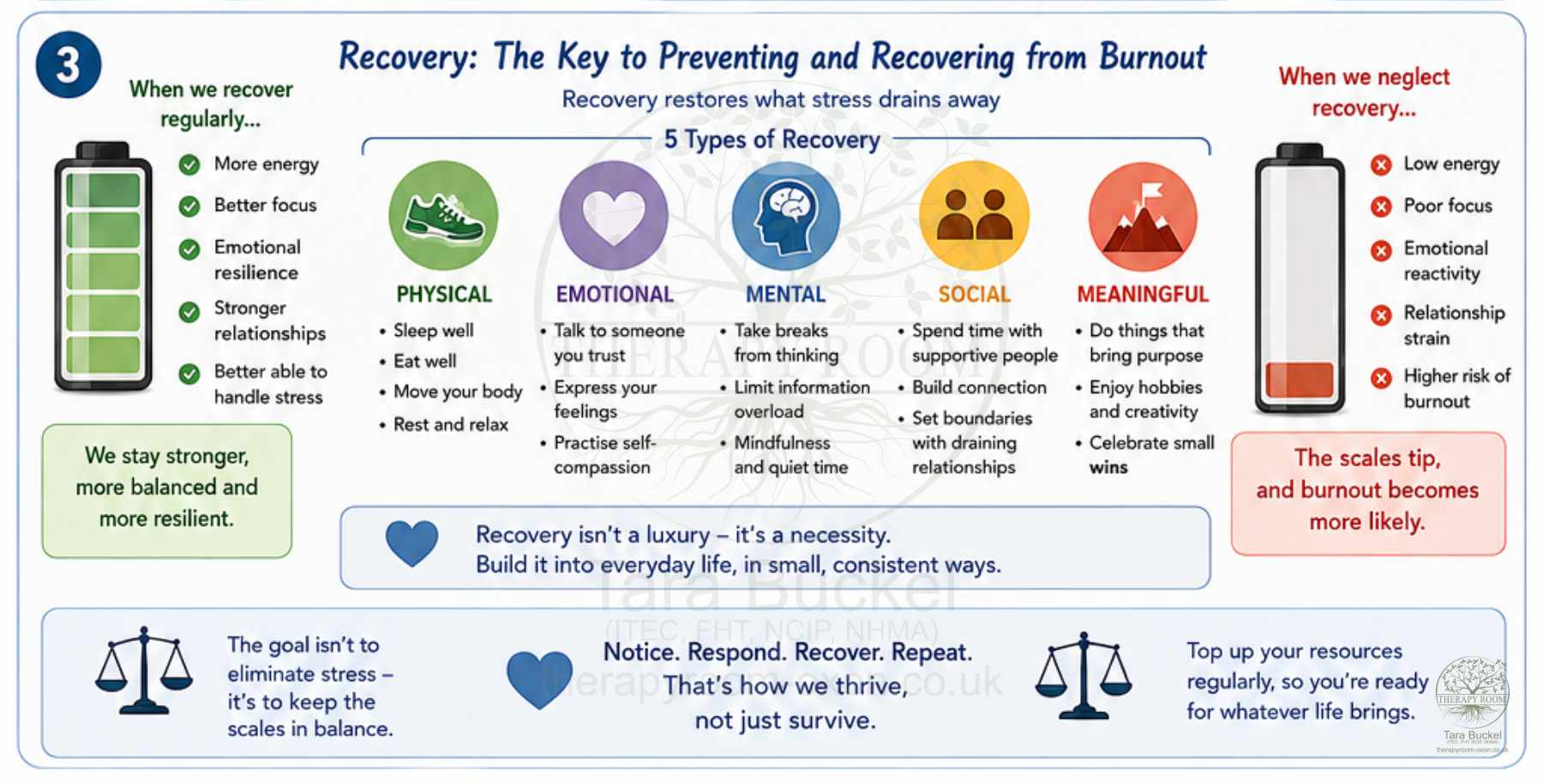
Regular recovery can support our energy, focus, emotional resilience and relationships. When it is repeatedly neglected, we may experience low energy, poor concentration, emotional reactivity and increasing strain.
Activities that produce a tangible or satisfying outcome can be especially valuable. Reading, light gardening, art, crafts, music and cinema are examples of slower, lower-energy activities that can help us reconnect with ourselves.
Hobbies, friendships and family relationships also protect us from feeling trapped within a single identity. If our entire sense of self depends on our work, difficulties at work can affect every part of how we see ourselves.
Knowing what matters to us outside work, and continuing to care for those parts of our lives, is an important element of both recovery and prevention.
When you are experiencing burnout, however, you may not have the energy for demanding commitments or intensive exercise. Even enjoyable activities can become another source of pressure if they are approached as tasks that must be completed.
If work is your passion, ask yourself whether there are other passions you could gently reclaim.
Reclaim is an important word here. Wellbeing advice often asks people to do more: start a new hobby, join a class, exercise more or begin a demanding new routine. Someone experiencing burnout may not have the time or energy to add more obligations.
Recovery is not about creating another list of things you “should” be doing. It is about slowly making room for the people, activities and experiences that help you feel like yourself.
If you think you may be experiencing burnout, begin by turning down the volume of intensity.
Take a slow and steady approach. Look for small, consistent opportunities to rest, reconnect and replenish your resources. Give your nervous system the chance to relearn how to enter a state of rest and recovery.
My clients often describe this change as feeling lighter and calmer, with less tension and pain. Recovery rarely happens all at once, but small shifts can accumulate over time.
The aim is not to eliminate all stress. It is to notice when the scales are tipping and respond before your resources are completely depleted:
Notice. Respond. Recover. Repeat.
That is how we begin to thrive, rather than simply survive.
You do not have to wait until burnout becomes overwhelming before asking for support. If you are feeling exhausted, disconnected or unable to properly switch off, contact me by WhatsApp or email. We can arrange a confidential, no-pressure chat to explore what you are experiencing, what support you may need and how you can begin moving towards a calmer, more sustainable way of living and working.